
The Reserve Bank of India's interest rate decision, macroeconomic data and global trends will drive investors' sentiment this week, with markets hoping to continue the positive momentum after ending FY24 on a buoyant note, analysts said. In addition, the trading activity of foreign investors, the rupee-dollar trend and the movement of global oil benchmark Brent crude would also influence trading in equity markets. The 30-share BSE Sensex climbed 14,659.83 points or 24.85 per cent in the 2023-24.
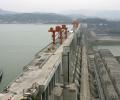
China has approved the construction of the world's largest dam on the Brahmaputra River in Tibet, close to the Indian border. The USD 137 billion project, which is expected to dwarf even China's own Three Gorges Dam, has raised concerns in India and Bangladesh, the downstream riparian states. Concerns in India are centered around China's potential to control water flow, potentially enabling the release of large amounts of water to flood border areas in times of hostilities. The dam is part of China's 14th Five-Year Plan, and the Chinese government claims that the project is safe and prioritizes ecological protection.

From the Sensex pack, Tata Motors, NTPC, Bajaj Finserv, Power Grid Corp, Titan, Asian Paints, IndusInd Bank, Maruti Suzuki India and Tata Steel were among the biggest gainers. Sun Pharmaceuticals, ITC, Hindustan Unilever, Bharti Airtel, UltraTech Cement and Reliance Industries were among the laggards.

'Volumes in F&O trading had gone up rapidly and, in a way, the increase in STT on F&O will protect investor interest.'

Among the Sensex firms, Larsen & Toubro, UltraTech Cement, JSW Steel, Titan, Bajaj Finance, Wipro, Tech Mahindra and Nestle were the major laggards. Maruti, Power Grid, Axis Bank, State Bank of India, NTPC, HDFC Bank, ITC and IndusInd Bank were the gainers.

Among the 30 Sensex companies, Kotak Mahindra Bank, Asian Paints, Reliance Industries, ITC, Sun Pharma, ICICI Bank, Axis Bank and JSW Steel were the major laggards. Larsen & Toubro, Tata Motors, Maruti, NTPC, Mahindra & Mahindra and UltraTech Cement were among the gainers.

Pakistan Prime Minister Imran Khan on Friday launched the country's first-ever national security policy, which articulates a citizen-centric framework, placing economic security at its core unlike the previous one-dimensional security policy where the focus was on the military.

The new excise policy, introduced in Delhi in November 2021, made sweeping changes to the city's liquor trade.
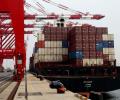
Introduced in 2015 under the Foreign Trade Policy, the mega MEIS was created out of a merger of five existing reward schemes.

India on Thursday extended tax holiday and duty refund for exporters, while allowing duty free capital goods import under its Foreign Trade Policy to insulate them from protectionism induced by recession abroad. Unveiling the five-year policy, Commerce Minister Anand Sharma set a target of $200 billion worth exports for next fiscal, a feat that India failed to achieve in 2008-09 due to a slump in global demand in the face of financial crisis.

"Less than two week back, we faced a set of allegations from the US about compliance practices. This is not the first time we have faced such challenges. What I can tell you is that every attack makes us stronger," he said addressing the 51st Gems and Jewellery Award in Jaipur.
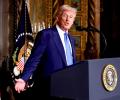
The US is currently Earth's most powerful country and a certain latitude of understanding -- a world view -- is popularly expected from its leadership. From a country identified with freedom, constitution, debate, democracy and the likes of Abraham Lincoln even as it had the most powerful military around, the US, following Trump's actions, seemed repositioned as militarily powerful with other qualities secondary, observes Shyam G Menon.

The exporters need to be told sometime or the other that the playing field can never be the same for all countries. Every country has its own advantages and disadvantages in terms of its natural endowments, capabilities of its manpower, stage of development, levels of technology absorption and so on. Each country has to make the best of what it has and carry on, says T N C Rajagopalan.

Among the 30 Sensex companies, Hindustan Unilever, Nestle, Asian Paints, HCL Technologies, HDFC Bank, Kotak Mahindra Bank and ITC were the biggest gainers. Larsen & Toubro, Power Grid, NTPC and State Bank of India were among the laggards.

India's economy is likely to grow by 6.5 per cent in the current and the next financial year, an EY report said, attributing lower than anticipated expansion in the September quarter to fall in private consumption expenditure and gross fixed capital formation. Real GDP growth eased to a seven-quarter low of 5.4 per cent in July-September -- the second quarter of the current 2024-25 fiscal year.
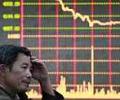
Exporters, who were banking on the foreign trade policy (FTP) announced this year, have started becoming jittery as merchandise goods' exports have fallen around 15 per cent in July.

Their favourite alternatives: Malaysia, Vietnam and the Philippines. Note, India is missing from that list. And this is despite an attractive financial incentive scheme for OSAT players. The reason, said a senior executive of a US chip company who had a meeting in Taiwan just a few weeks ago, is that "they want more predictability in government policy because they plan to put in big money."

The government has announced several incentives for exporters to explore new destinations under focus market and focus product scheme.

Domestic macroeconomic data announcements, global trends and trading activity of foreign investors would guide market sentiments this week, analysts said. After a record rally, markets may face volatile trends this week amid elevated valuations and investors would also keep a track of global oil benchmark Brent crude and rupee-dollar movement for further cues. "Potential volatility in the stock market is anticipated this week. Elevated valuations remain a concern, with investors now focusing on monsoon progress and its impact on the rural economy.
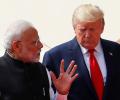
Delhi's appeasement strategy may now translate as more mega arms deals with the US, generating substantial business and job creation in the American economy. Make no mistake, Americans will use it to pressure India, predicts Ambassador M K Bhadrakumar.

The Biden administration's failure in stopping two major wars and several minor ones was seen as a major disaster by many Americans and the world at large, observes Ambassador T P Sreenivasan.

'It took us 75 years to reach a per capita income of $2,730.' 'According to IMF projections, it will take only five years to add another $2,000.'

The National Security Strategy document should flag all major issues concerning security strategy and provide guidelines to concerned departments to work out suitable action plans. Since the global and regional geopolitical canvas is dynamic, the NSS document should be deliberated at length before formulation and should be reviewed periodically, recommends Commodore Venugopal Menon (retd).
Director General of Foreign Trade said on Thursday that India will have to double its exports to $80 billion while maintaining a growth rate of 12 per cent in order to increase its share of global trade to one per cent by 2007.
India on Friday said it would lay down clear guidelines on imports of genetically modified crop varieties, Commerce Minister Kamal Nath said.

Maldivian Foreign Minister Moosa Zameer on Saturday said India's gesture to renew the quota to allow the export of certain quantities of essential commodities for his nation signifies the longstanding bilateral friendship and the commitment to further expand trade and commerce.

Ahead of unveiling the Foreign Trade Policy, Commerce Minister Anand Sharma on Wednesday said the government was looking at cooperating with states to bring down transaction costs to make exports more competitive. India's exports have been on a downslide since October 2008.

A day after lambasting e-commerce players for predatory pricing, Union Commerce Minister Piyush Goyal on Thursday said he is not against online platforms but India wants such entities to be "fair and honest" in their conduct. Speaking with reporters in the financial capital, the outspoken Union minister said the rule of the law should be followed in letter and spirit, and made it clear that consumer preferences should not be influenced by algorithms.
Equity markets will take cues from global trends and trading activity of foreign investors, while in the latter part of the week the first quarter earnings from IT majors TCS and HCL Technologies would guide investor sentiments, analysts said. Markets may consolidate after the record rally last week, experts added. "On the domestic front, the Q1 earnings season begins this week. Key companies such as TCS and HCL Technologies will release their earnings on July 11 and 12, 2024, respectively.
As the results season kicks in, the quarterly earnings numbers of several blue-chip firms -- such as Infosys and Reliance Industries -- along with global trends and trading activity of foreign investors, will determine equity market movement in the holiday-shortened week ahead, according to analysts. The domestic WPI inflation data for June -- scheduled to be announced on Monday -- will also influence trading sentiments, traders said. Markets will remain closed on Wednesday for Muharram.

Investor wealth eroded by Rs 4.46 lakh crore in a single day on Friday with the benchmark BSE Sensex tanking more than 1 per cent in line with global stocks rout. The 30-share BSE Sensex plunged 885.60 points or 1.08 per cent to close at 80,981.95 with 25 of its components declining and five ending with gains. During the day, it nosedived 998.64 points or 1.21 per cent to hit an intra-day low of 80,868.91.

'India represents one of the top opportunities with robust growth, solid fundamentals, and openness to foreign investment.'

One of the most favoured duty reimbursement schemes among exporters - the Duty Entitlement Passbook (DEPB) scheme - is likely to be scrapped, as the government gears up to introduce the Goods and Services Tax (GST) from April 1.
India on Friday said it would make imports of precious metals and stones easier in order to promote gems and jewellery exports.

'If the criminal or civil charges are deemed unworthy or defective, Trump's new justice department and SEC can withdraw the criminal and civil cases.'

'The race is now on for Indian IT firms to develop their AI prowess and focus on a software-first approach to services as the people element becomes more complicated with Trump's expected new regulations.'
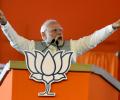
Prime Minister Narendra Modi's goal of making India a high-income economy by 2047 is unlikely to be achieved, but the country should become an upper middle-income nation by then, Financial Times chief economics commentator Martin Wolf said on Friday. Wolf further said that India would also become a superpower by 2047. "India wishes to become a high-income country by 2047.
 © 2026 Rediff.com - Advertise with us - Disclaimer - Privacy Policy - Sitemap - Feedback - About us - Terms of use - Grievances